Over 1 million more households than in the Census 2011

Over 1 million more households than in the Census 2011

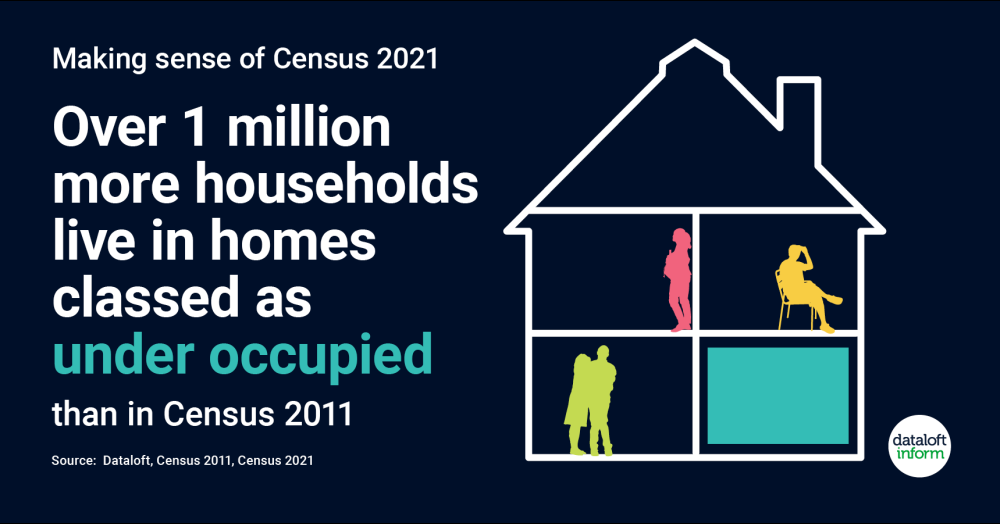
The 2021 census reports that just over 1 million more households live in accommodation classed as being under occupied than in 2011. This is 69% of households.


  • An under-occupied household is classed as a household with more bedrooms than required. Conversely, the number of over-occupied households has fallen by just over 8,000 since 2011.
  • Under-occupied homes provide householders with opportunities to downsize, expand their family or use a bedroom space in a different way.
  • With increased working from home, many people are choosing to live in properties larger than their needs to allow for home offices, studios and extra areas to relax in. Whatever the use, these extra rooms allow for greater choice and flexibility in the future. Source: Dataloft, Census 2011, Census 2021


Get in touch with us

The November Budget introduces new tax measures that will influence affordability, demand and long-term property decisions. With higher household costs and a new levy on homes over £2 million, buyers and sellers will need a clearer strategy as they plan their next steps.

The property landscape is constantly evolving, with new legislation, market trends, and industry developments that can affect landlords, sellers, buyers, and tenants alike.

New Year, fresh goals, if moving home by spring 2026 is on your list, now’s the moment to plan. Understand how long properties took to go under offer and complete in 2025, and the key steps you need to hit your timeline. Read on to map out your best move ever.

If you’re planning to sell in early 2026, now is the time to understand the timeline, the preparation and the steps that will help you move smoothly from listing to completion.