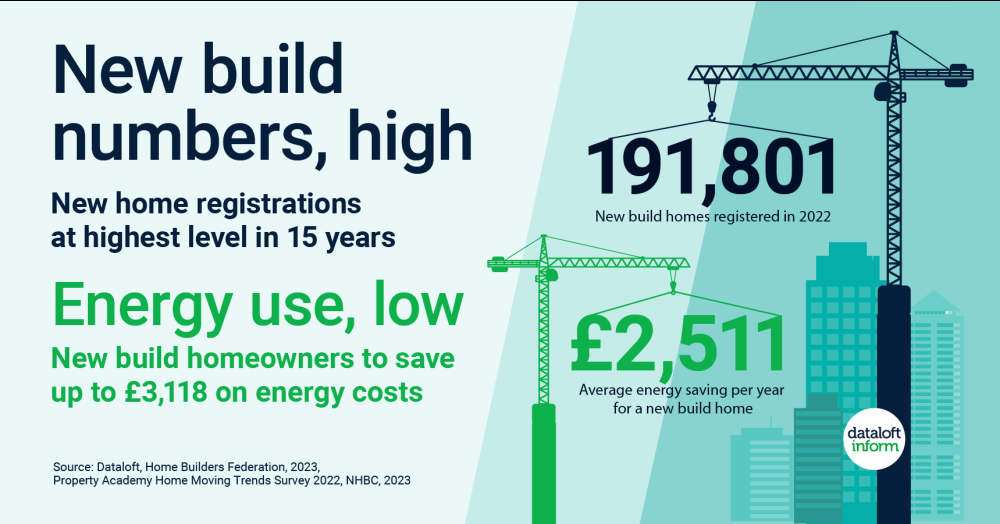
New build number high, new build energy use low

New build number high, new build energy use low

Nearly 200,000 new build homes were registered in the UK in 2022, the highest number since 2007 and up 26% on 2021, according to the latest statistics produced by the NHBC. Registrations increased in all regions of England and Wales.


  • More than half of buyers would consider a new build home. The ready-to-move-in condition, reduced running costs, lack of maintenance and developer incentives are all highly attractive to prospective purchasers.
  • Owners of new build homes are set to save an average of £2,500 per year on energy costs after the Energy Price Guarantee increase anticipated in April, according to the Home Builders Federation (HBF).
  • The HBF analysed all EPCs undertaken during 2022 and found that across all property types and sizes, kWh energy usage per m² was far lower for new build than existing properties. Source: Dataloft, Home Builders Federation, 2023, Property Academy Home Moving Trends Survey 2022, NHBC, 2023


Get in touch with us

April is a good time for buyers to focus on readiness rather than guesswork. In a market where choice has improved but confidence remains mixed, being organised can make all the difference when the right home comes along.

Today, 1st May 2026, marks a significant milestone for the UK rental market as the Renters' Rights Act officially becomes law. This pivotal legislation introduces substantial changes for both landlords and tenants across England.

April is the final window for landlords in England to prepare for the first phase of the Renters’ Rights Act. With the new tenancy regime starting on 1 May 2026, now is the time to review paperwork, processes and whether self-management still feels realistic.

For tenants, April is a useful point to pause and plan. With rents still rising across the UK and the first phase of rental reform approaching in England, this is a good time to review your budget, renewal options and next move.