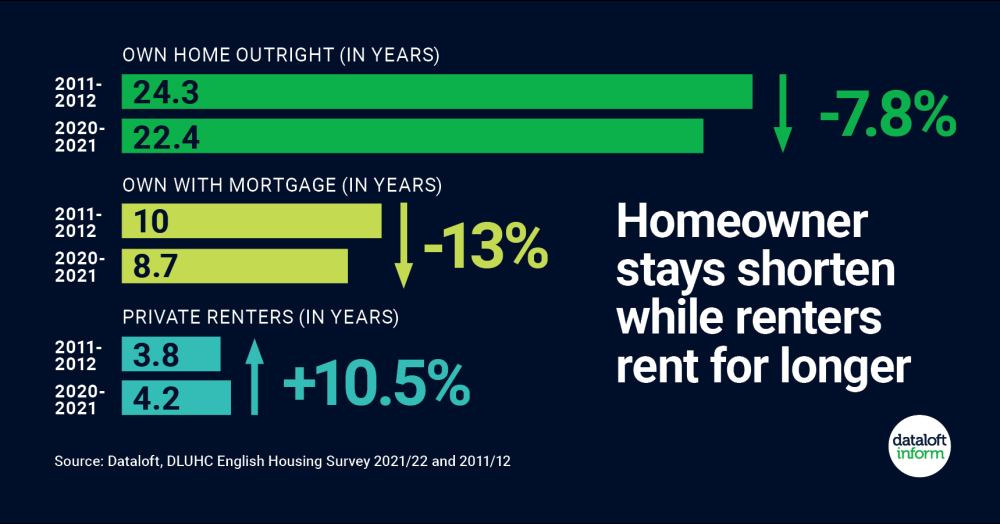
Homeowner stays shorten while renters rent for longer

Homeowner stays shorten while renters rent for longer

While we wait for the 2021 census housing data we look to the newly published 2020/21 English Housing Survey data to help us understand the changing relationship we have with our homes since the last census.


  • Since 2011/12, owner occupiers have seen a drop in their length of tenure, from an average of 17.1 years in their accommodation to 16 years in the new 2020/21 survey results.
  • In contrast, private renters have increased their tenure length, increasing from an average of 3.8 years in 2011/12 to 4.2 years in 2020/21.
  • This slight swing to longer private tenancies comes amidst a new cost-of-living crisis where the English Housing Survey reports 52% of private renters feeling that they are unlikely to be able to afford to buy a home. In 2011/12, this figure was 41%. Source: Dataloft, DLUHC English Housing Survey 2021/22 and 2011/12


Get in touch with us

The property landscape is constantly evolving, with new legislation, market trends, and industry developments that can affect landlords, sellers, buyers, and tenants alike.

Thinking of selling soon? Setting the right asking price can make or break your move. Here’s why overvaluing your home, even with the best intentions, can actually reduce its true market value and slow your sale.

The November Budget introduces new tax measures that will influence affordability, demand and long-term property decisions. With higher household costs and a new levy on homes over £2 million, buyers and sellers will need a clearer strategy as they plan their next steps.

If you want to move in 2026, positioning yourself as a serious buyer is essential. Here’s how to put yourself ahead of the competition and be taken seriously by sellers.